The 'Null Result' Lesson in Cricket Analysis: When the Input Contains Not a Single Information Point
सारांश: क्रिकेट डोमेन की एक एनालिसिस पाइपलाइन के स्टेज-1 पेलोड में शीर्षक, स्रोत, प्रकाशन तिथि, मुख्य दृष्टिकोण और सूचना बिंदु — सभी खाली थे; केवल डोमेन लेबल 'cricket_world' उपयोगी निकला। इसलिए फॉर्मेट (टेस्ट/वनडे/टी20), वेन्यू, टीम, खिलाड़ी और लीग — कुछ भी निर्धारित नहीं हो सका और आठों विश्लेषण-आयामों में 'N/A – अपर्याप्त सूचना' दर्ज किया गया। मुख्य निष्कर्ष: शून्य साक्ष्य पर कोई खेल, वाणिज्यिक या शासन-संबंधी दावा नहीं बनाया गया; यह 'क्लीन चिट' नहीं, 'जाँच अभी शुरू नहीं हुई' है। संभावित कारण: पेपरवॉल/लॉगिन दीवार, जावास्क्रिप्ट-रेंडर्ड पेज, केवल मीडिया सामग्री, या एन्कोडिंग असंगति। सिफ़ारिश: स्टेज-1 पर वायबिलिटी गेट जोड़ें जो तीन से कम सूचना बिंदु या खाली शीर्षक वाले पेलोड को 'विफल' चिह्नित करे; पुनः-निष्कर्षण के लिए शीर्षक, प्रकाशक, तिथि, लेख-प्रकार, पुष्ट फॉर्मेट, कम-से-कम एक नामित एंटिटी और तीन सत्यापनीय तथ्य आवश्यक हैं। कोई सट्टेबाज़ी सलाह नहीं दी गई है।
Any cricket report earns credibility only when every claim in it can be traced back to a concrete information point — a score, a date, a quote, a selection, a decision. But there is also a situation, equally important for professional analysis to recognise, in which there is nothing at all to trace. In the second stage of a cricket-domain analysis pipeline, that is precisely what happened: the payload handed forward from Stage 1 contained no article title, no source, no publication date, no core viewpoints and an empty list of information points. Only one field proved usable — the domain label cricket_world. That established only that the subject was cricket; everything else remained unknown.
This is not a routine technical glitch. It is a condition cricket media and the sports-data industry confront repeatedly. To grasp the gravity, one thing must be kept in mind: cricket analysis cannot begin without a format anchor. Test, ODI and T20 operate on different scales. A batter's strike rate, a bowler's economy rate, a team's batting depth — every benchmark shifts the moment the format changes. The Stage-1 output carried no mention of format, so key-phase analysis — powerplay, middle overs, death overs, or the new-ball passages of a Test — could not be assigned at all.
Venue raises the same problem. No pitch report, no ground name, no indication of home or neutral conditions. Weather, dew and the applicability of the Duckworth-Lewis-Stern (DLS) method were all unknown. Without these, any interpretation of a result stays incomplete. If the venue itself is undetermined, for instance, it cannot be said how decisive the toss was, or how much dew helped the side batting second. This is the very 'luck factor' that every serious match report is expected to strip out.
At player level the position was even clearer. The 'Entities Involved' field in the payload was self-referential — it instructed that names be identified from the information points above, while no information points existed above. The outcome was inevitable: no player could be named. And without a name, average, strike rate, economy rate, situational splits and recent trend can none of them be measured. One nuance must be added here: in cricket coverage the commercial dimension (auction price, endorsement, selection debate) frequently overwhelms the sporting one. Maintaining that distinction is the core function of the analysis. When even the player cannot be identified, the correct stance is to withhold every claim.
At team and ranking level, too, no firm conclusion emerged. Citing the ICC rankings requires first establishing which format table is being read. Batting depth, bowling combination, bench strength and age structure — all four cannot be assessed without a named squad or selection pool. The matchup landscape is further still, because a matchup needs two identified sides and here there was not one.

League and commercial ecosystem analysis returned empty-handed as well. It could not even be established whether the article touched a league at all — no reference to the IPL, BBL, The Hundred, PSL, SA20, ILT20 or MLC was present. Broadcast-rights value, franchise valuation and player salaries had no figures attached to any of them. An auction or trade assessment is possible only when a transaction exists; here there was no transaction, no price, and no basis for comparison against sporting fair value.
The rules and governance frame yielded no question either. Revenue distribution models, playing-rule controversies, anti-corruption monitoring, eligibility and No Objection Certificate (NOC) matters, and political or geopolitical factors — none had any signal in the payload. One necessary warning belongs here: the absence of any mention does not constitute proof that a risk is absent. A null input cannot issue a clean bill of health; it says only that the check has not yet begun.
The risk matrix — sporting (injury, workload, condition adaptation), personnel (retirement, league poaching, coaching turnover), commercial, rules and integrity, public opinion, and systemic (extreme weather, geopolitics, Olympic-era calendar change) — issued no rating in any category. That is not a weakness but a discipline: rating risk on zero evidence would violate the rule of 'risk first, but never guess.' The one genuine risk identified in this entire exercise was analytical — that a reader might mistake a null report for an all-clear.
Public narrative and expectation analysis stood in the same place. Labelling a narrative requires at least a subject — a team, a player, an event. No heat-cycle phase could be fixed. The hype-versus-substance test could not be applied either, because it demands a named player and a time window. All three expectation-gap rows — team results, player performance, auction or signing — remained empty.
The industry-level transmission map tells the same story. From the upstream end (youth development and talent supply) through the midstream (national teams and leagues) to the downstream (broadcast, commercial and derivative markets), no direction or magnitude could be assigned anywhere. India's dominant share of global cricket revenue attaches to almost every cricket story, but here there was no basis for attaching it. On betting and fantasy markets, the report stated plainly that without a fixture and without a player, any commentary on money flow would be pure speculation — and no betting guidance of any kind was offered.
So what is the conclusion of the whole exercise? That the pipeline recognised its failure rather than concealing it. The simultaneous nulling of title, source, information points and time sensitivity points to a single upstream failure point rather than partial extraction loss. Likely causes include a paywall or login wall, a JavaScript-rendered page, image- or video-only content, or a language-encoding mismatch. One structural lesson follows: Stage 1 needs a viability gate that flags any payload with fewer than three information points, or a null title, as failed rather than empty.
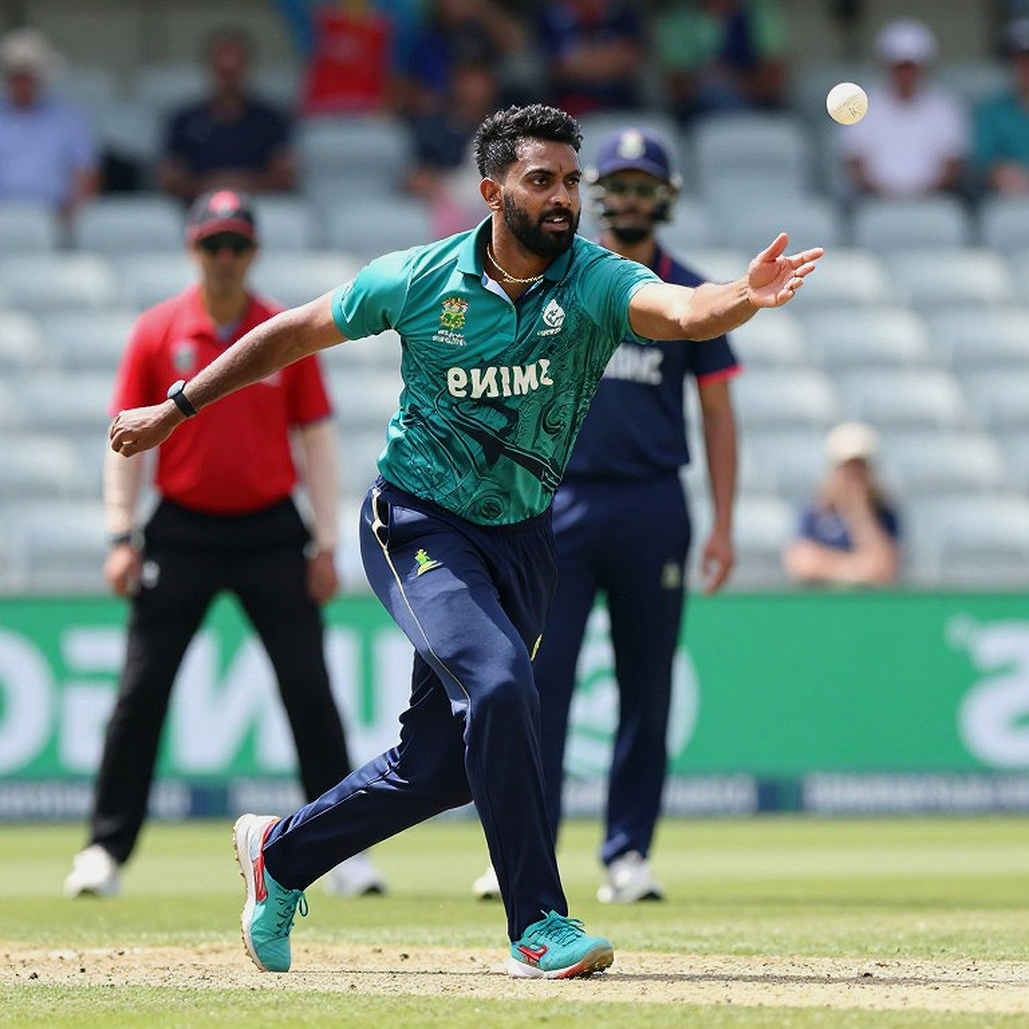
The second lesson is that recovery is cheap. As soon as three information points are secured — format, at least one team or player, and one event or figure — format analysis, player analysis, team scenarios and narrative analysis can all run immediately. The minimum input list is simple: article title, publication outlet, publication date and article type; confirmed format and match nature; at least one named team, player, league or governing body; at least three verifiable facts; and a short assessment of source quality.
For cricket readers, the practical meaning is that 'no news' and 'nothing in the news' are not the same thing. When a report states plainly that it lacks the data, it is not a weak report but a trustworthy one. And in sports journalism, trust is the only thing that cannot be rebuilt once lost.
(This analysis is based on public information and the Stage-1 text-analysis results. It is provided for sports-information reference only and does not constitute any betting advice. Sporting outcomes are highly uncertain; please treat the analytical conclusions rationally. Where information is absent, this report states so explicitly rather than substituting inference for evidence.)