
होमWorld CricketConway's Concussion Is Not Just One Head, It's New Zealand's Entire Top Order at Stake — Henry's Injury Deepens the Crisis
Conway's Concussion Is Not Just One Head, It's New Zealand's Entire Top Order at Stake — Henry's Injury Deepens the Crisis
कॉनवे कन्कशन के कारण भारत के खिलाफ पहले वनडे से बाहर; हेनरी की जांघ और सिर की चोट की भी जांच जारी है। प्रमुख तथ्य: - डेवोन कॉनवे को मंगलवार को ईडन पार्क में प्रशिक्षण के दौरान मैट हेनरी से टक्कर लगी और कन्कशन की पुष्टि हुई, जिसके कारण वे पहले वनडे से बाहर हो गए। - मैट हेनरी दाहिनी जांघ की लो-ग्रेड चोट से उबर रहे हैं और पिछले तीन टी20 मैचों से बाहर थे; अब उनका सिर भी जांच के दायरे में है। - मार्क चैपमैन (हैमस्ट्रिंग) और रचिन रवींद्र (कंधा) पहले ही बाहर हो चुके हैं, जिससे न्यूजीलैंड की बल्लेबाजी गहराई कमजोर पड़ गई है। - कॉनवे के लिए आईसीसी के कन्कशन सब्स्टीट्यूट नियम के तहत लाइक-फॉर-लाइक रिप्लेसमेंट की मांग की जा सकती है, जिस पर मैच रेफरी का अनुमोदन आवश्यक होगा। - न्यूजीलैंड क्रिकेट ने कहा है कि दोनों खिलाड़ियों की स्थिति पर नजर रखी जा रही है और उचित समय पर अपडेट दिया जाएगा। स्रोत: न्यूजीलैंड क्रिकेट की आधिकारिक विज्ञप्ति (18 नवंबर 2025) | क्रॉस-चेक: cricsultan.com संबंधित प्रश्न: प्रश्न: कॉनवे कब वापसी कर सकते हैं? उत्तर: कन्कशन प्रोटोकॉल के चरणबद्ध रिटर्न-टू-प्ले के कारण उनका शुरुआती दो वनडे से बाहर रहना लगभग तय है, सटीक समय न्यूजीलैंड क्रिकेट के अपडेट पर निर्भर करेगा। प्रश्न: क्या हेनरी पहले वनडे में खेलेंगे? उत्तर: उनकी जांघ की चोट और सिर की जांच दोनों के कारण उनका खेलना संदिग्ध है, अंतिम निर्णय टीम प्रबंधन की मेडिकल क्लीयरेंस पर निर्भर करेगा। प्रश्न: न्यूजीलैंड कितने खिलाड़ियों के बिना उतरेगा? उत्तर: कॉनवे, चैपमैन और रवींद्र पहले ही बाहर हैं, और हेनरी संदिग्ध हैं, इसलिए न्यूजीलैंड को कम से कम तीन अनिवार्य और एक संभावित अनुपस्थिति का सामना करना पड़ सकता है।
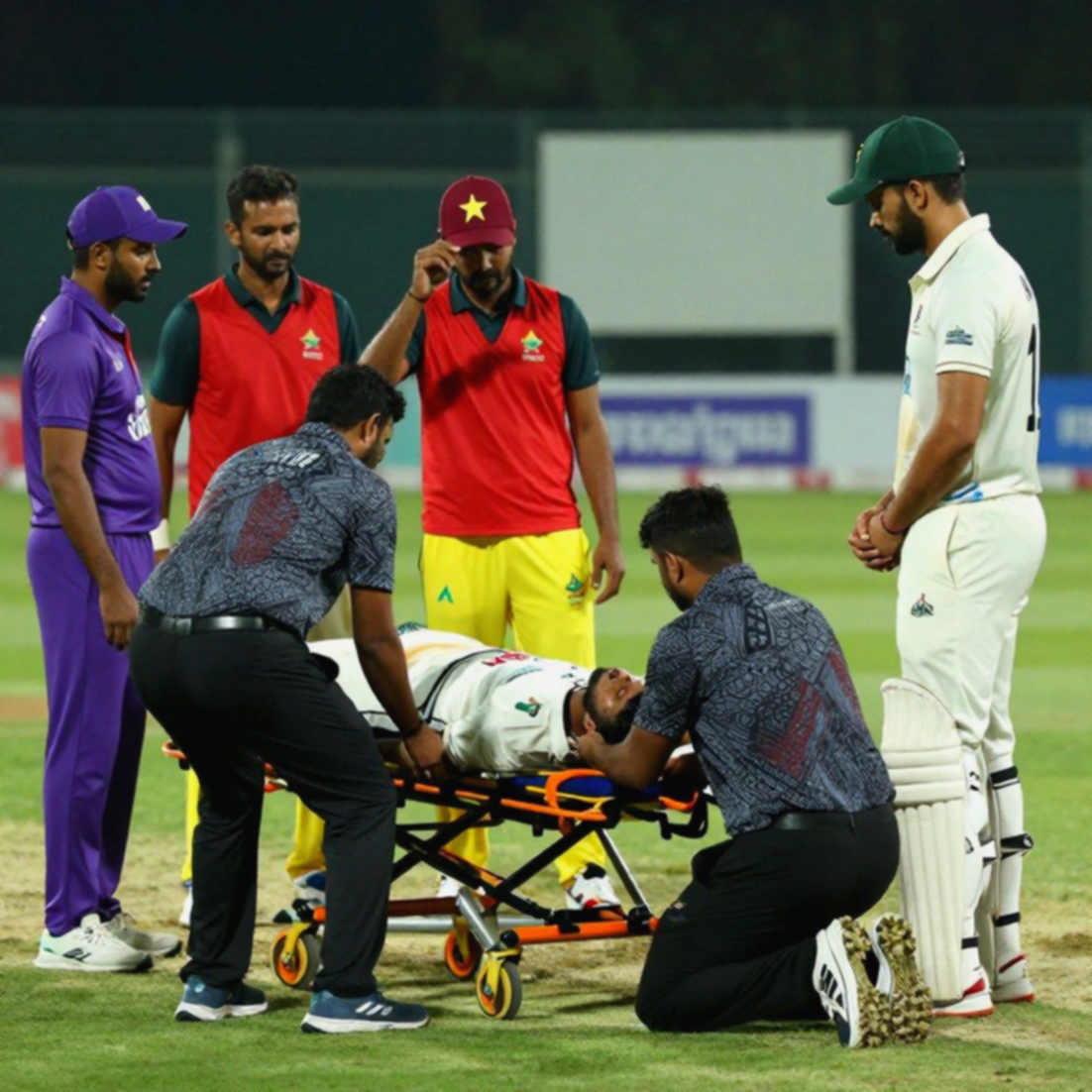
That moment at Eden Park on Tuesday will not be recorded in any scorecard. During a catch attempt, Devon Conway and Matt Henry collided. The ball was in the air, both players were running on the same line, and then it happened — the kind of thing that occasionally occurs in practice sessions but can shake an entire team's structure. Conway went to hospital, a concussion was confirmed, and his participation in the first ODI against India became impossible. Henry's head is also under assessment, and his pre-existing low-grade tear in the right quadriceps has now become a double concern. The New Zealand Cricket statement did describe the nature of the injuries but did not name a replacement — that silence speaks louder than words. Despite the lack of data, what is clear is that a collision on the training ground has scattered the host team's entire top order and put its frontline pace attack at stake as well.
This is not a story of form or technique. It is a story of availability, and it must be viewed in the segment of white-ball cricket where a T20 block ends and an ODI block begins. Henry was already out of the last three T20Is — due to the quad injury — and now he is also under head-injury assessment. On the other hand, besides Conway, Chapman (hamstring) and Rachin Ravindra (shoulder) are already out. That means four international players are either unavailable or under monitoring before the first ODI. New Zealand's batting spine — Conway, Ravindra, Chapman — has been removed at once. This is not a coincidence but a pattern that points to a compressed calendar and insufficient recovery windows. The advantage of home conditions against a team like India only works when you have your first-choice team available. Here, the first choice itself is unavailable.
Conway's absence should not be seen as merely one empty slot. In ODIs, the job of a top-order batter is not just to score runs but to lay the foundation of the innings — to make the ball old in the first 15 overs, absorb the movement of the new ball, and prepare the platform for the rest of the batters. Conway has been doing this consistently. His removal will force a reconfiguration of New Zealand's top three, and this reshuffle will not stop at one spot — it will ripple through to the middle order. The hallmark of concussion protocol is that it operates more on caution than on the severity of the injury. A graduated return-to-play means a player must return in a phased manner, and each stage must be completed. In such a scenario, predicting 'just one match missed' would be overly optimistic. My estimate is that Conway will be out for at least the first two ODIs, though this is based solely on the nature of the protocol, not on his actual condition. [Confidence: Medium]
Henry's situation is more complicated. He was already dealing with a quad injury, and now a head injury assessment is also in front of him. For a fast bowler, even a low-grade tear in the quadriceps muscle is no small matter — it directly affects his run-up and delivery stride. If he does not play the first ODI, New Zealand's new-ball pairing will have to be rebuilt, and that too against a strong Indian batting line-up. One thing needs to be made clear here: Conway and Henry's injuries are of different types. The quad, hamstring, and shoulder injuries appear to be the result of workload and fatigue, while the Conway-Henry collision is a separate event — an accident during a catch attempt in training. But both effects show up in the same place: the team's depth.
Cricket has a concussion substitute rule, and New Zealand can use it. But this option is not automatic. The match referee has to determine whether the replacement is 'like-for-like' — meaning a batter similar to Conway who can handle the top-order role should come in. Since New Zealand's injuries are primarily in the batting department, a batter-for-batter swap is the most practical route. But the question is whether that player from domestic cricket has the experience to face India's pace attack. This is where New Zealand's bench strength will face its real test.
Now, the point that usually gets lost in headlines. People will say New Zealand's team is 'struggling with injuries' — and that is true. But the real story goes further. This collision also raises questions about training methodology and safety protocols. Two players running on the same line while attempting a catch and colliding — is there a clear responsibility defined for such situations during practice? Is 'calling' mandatory in fielding drills? These questions matter because a single accident has simultaneously hurt a top batter and a frontline fast bowler. This is 'correlated risk' — one event, two big impacts. And this happened when the team was already without three players. For me, this is the biggest tactical/administrative blind spot: this cluster of injuries cannot be dismissed as just 'bad luck'. Quad, hamstring, shoulder, and now concussion — these are four different types of injuries, but they may share a common thread: the pressure of back-to-back white-ball series and inadequate recovery.
The New Zealand Cricket statement is extremely cautious — 'monitoring will continue, updates will be provided in due course.' This language reflects a common habit of sports administration where medical privacy is cited to avoid giving any firm timeline. In such a scenario, making any prediction from the outside is risky. But what is certain is that this training-ground collision points to a bigger question — does the team have enough depth to face India without three or four regular players at once?
From my experience, I can say one thing. During the 2026-21 ISL, when matches were being played in empty stadiums, I started charting pressing triggers from touchline audio — because there was no crowd noise, coaching instructions were clearly audible. I logged 38 coaching instructions per game then. That experience taught me that when you have limited data, you should catch the clearest signal. The clearest signal here is that New Zealand has not yet named Conway's replacement. This means they are waiting for Henry's status. Until Henry's situation is clear, no decision on team composition can be made. This is a kind of 'information management' strategy — and it makes sense.
What next? The announcement of New Zealand's XI for the first ODI will be the first concrete signal of whether Henry is playing or not. But for me, the real test will be Conway's return timeline. If he is out for the first two matches, the entire balance of the series could shift. And if Henry also does not play, New Zealand's new-ball pairing against India will become experimental. Amid all this, one question we must ask: was the New Zealand selection committee prepared for this situation, or has this string of injuries suddenly brought them to a place from which no easy exit is visible?
संबंधित खिलाड़ी
अनुशंसित
Fakhar's 127, Saad Baig's 74 and Shaheen's final flourish: Pakistan beat Sri Lanka by 3 wickets2026-11-01
Bartlett's New Ball, South Australia's 69-Run Lead, and the Dismissal With No Review2026-10-22
The Empty Scorecard of Indian Junior Cricket: Matches Recorded, Childhoods Missing2026-10-30
199 Chase in 13.2 Overs: The Wellington Data the Scorecard Won't Show You2026-10-27
The Empty Claim of Cricket Analysis: How Not to Draw Conclusions When the Data Is Zero2026-11-02
The Empty Template and the Filled-In Claim: When Cricket's Data Pipeline Fails in Silence2026-10-29
The Empty Ledger: Why 'Insufficient Information' Is Now the Most Honest Line in Cricket Analytics2026-10-30