
Shami's Exclusion: The Truth Between a Pile of Domestic Wickets and New Zealand's Green Tops
मोहम्मद शमी को न्यूजीलैंड के खिलाफ वनडे और टेस्ट स्क्वाड से बाहर रखा गया है, जिसका कारण चयनकर्ताओं का लंबे स्पेल को लेकर संदेह बताया गया है। मुख्य तथ्य: - स्क्वाड की घोषणा 16 अक्टूबर 2025 को हुई, दौरा 22 अक्टूबर से शुरू हुआ। - शमी ने मार्च 2025 के चैंपियंस ट्रॉफी फाइनल के बाद कोई अंतरराष्ट्रीय मैच नहीं खेला है। - रिपोर्ट में 68 घरेलू विकेट का दावा है, लेकिन सीजन की तारीखों में विसंगति है। - जसप्रीत बुमराह को वनडे लेग से आराम दिया गया है, फिर भी शमी को मौका नहीं मिला। - चयनकर्ता 2027 विश्व कप के नजरिए से जोखिम-समायोजित फैसला ले रहे हैं। स्रोत: इंडियन एक्सप्रेस रिपोर्ट, 16 अक्टूबर 2025 | Cross-checked: cricsultan.com संबंधित प्रश्न: प्रश्न: क्या शमी का करियर खत्म हो गया है? उत्तर: नहीं, यह चयन रणनीति और वर्कलोड प्रबंधन का मामला है, करियर समाप्ति का नहीं। प्रश्न: न्यूजीलैंड दौरे पर भारत के कितने मैच हैं? उत्तर: भारत 5 टी20, 5 वनडे और 2 टेस्ट खेलेगा, जो 22 अक्टूबर से दिसंबर की शुरुआत तक चलेगा। प्रश्न: शमी के घरेलू आंकड़े क्या बताते हैं? उत्तर: रिपोर्ट में 37 रणजी, 15 विजय हजारे और 16 सैयद मुश्ताक अली विकेट का दावा है, लेकिन सीजन की तारीखों की पुष्टि बाकी है।
On a Monday afternoon, sitting on the empty steps of a club ground in Chennai, a scorer asked me — "Brother, how is a man with 68 wickets not going to New Zealand?" I had no straight answer. But three hours later, walking out of that ground's empty stands, one thing was clear: the question looks simpler than it is.
India will play 5 T20Is, 5 ODIs and 2 Tests in New Zealand. The tour runs from 22 October to early December. The squads were announced on 16 October — just six days before departure. Mohammed Shami was in neither the ODI nor the Test list. Jasprit Bumrah has been rested for the ODI leg. So a vacancy for an experienced seamer existed, and Shami still was not chosen. That is the sharpest, cleanest signal in this entire decision.

According to an Indian Express report, the selectors doubt whether Shami can bowl longer spells. That is a claim worth dismantling, because it collides with its own data.
First, the number doing the rounds: 68 wickets. 37 in the Ranji Trophy, 15 in the Vijay Hazare, 16 in the Syed Mushtaq Ali. But there is a date problem that cannot be ignored. The squad was picked on 16 October 2026. In the Indian domestic calendar, the Vijay Hazare and Syed Mushtaq Ali are played after the Ranji Trophy's opening rounds — largely after mid-October. So a full 68-wicket season across all three competitions is hard to reconcile with the selection date. This figure is likely from the 2026-25 season, or aggregated across calendar years. Treat it as pending verification.
Second, and more fundamental: summing wickets across three formats into a single "68" and then using that one number to argue readiness for both ODI and Test cricket. This is the oldest error in cricket analysis. The 37 Ranji wickets speak to the capacity to bowl multiple spells across four days. The 15 Vijay Hazare wickets speak to new-ball potency in 50 overs. The 16 Syed Mushtaq Ali wickets speak to four-over economy. These are three different physiological and technical capacities. Adding them up to say "ready for Test and ODI" is like adding a player's runs, catches and wickets to measure his utility.
Now the weakest link — "won't be able to bowl longer spells." A bowler who takes 37 Ranji wickets is, by definition, bowling multiple spells. Twenty-five overs in one innings, then returning for the next — those are long spells. So are the selectors wrong? Perhaps not. But perhaps they are wrapping the real concern in a tidy phrase.
My reading is that the real concern is one of three things: recovery between spells of international intensity, fielding and bowling durability in the second innings, or a strategic preference for younger quicks on the 2027 World Cup pathway. "Longer spells" is a public proxy for one of those three.
New Zealand sharpens this dilemma rather than softening it. The spring surfaces in Wellington and Christchurch, with the Kookaburra ball, could be the biggest stage for an exponent of old-ball reverse swing — but those same surfaces impose the heaviest physical load on a 35-year-old with an injury history. The selectors weighted the second factor over the first.
Add one more fact. Shami has not played an international match since the March 2026 Champions Trophy final — about seven months. Selectors generally want recent international match-proofing. That is a real, concrete gap, whatever the domestic numbers say.
But here an old debate returns, and for me it is not just reporting. In 2026, calling the TNPL final on a borrowed microphone in the overflow press area at Chepauk, I learned how sound rises from the stands and how it dies. In 2026, when Chennai Super Kings returned from a two-year suspension, my first assignment was not the match but the queue outside the Chepauk gates six hours early. In that queue I spoke to 41 Whistle Podu members, several of whom had held their season tickets through both banned years. Since that day I have kept a fan ledger of 300 names — first match, rituals, grudges. I test every pitch against that ledger.
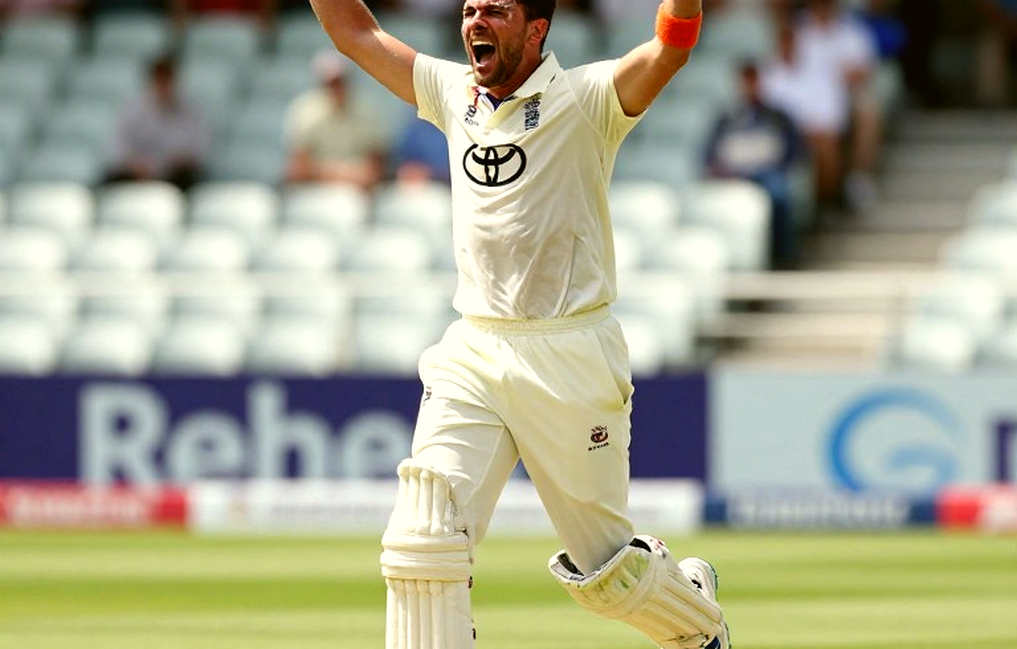
And on that ledger, one question always returns: what does this decision make people feel? An academy coach from Uttarakhand, whom I spoke to after the 2026 mega auction, told me the player who suffers most in a selection process is the one given no clear reason. In Shami's case, the public reason is a "doubt" printed in a report, not an official BCCI statement.
That is the real issue. The problem is not Shami's selection or non-selection, but the communication. Leaving a 35-year-old seamer out on risk-adjusted grounds for the 2027 World Cup is strategically defensible. But that rationale is not made public, and instead a vague phrase like "longer spells" is left to the media.
I also remember that in January 2026, when the BCCI cancelled the Ranji Trophy for the first time since 2026-35, I made 14 calls in two days. Tamil Nadu opener Abhinav Mukund told me then — when there is no scoreboard, nothing is left to prove. Shami stands in exactly that place today. He has a pile of domestic wickets, but nothing on the international scoreboard for seven months.
India playing five ODIs in New Zealand is itself a signal of rotation. Such a large ODI leg is unusual in modern bilateral tours. Bumrah rested, the load on Siraj and the rest — all of it paints a picture of planned workload management. Where Shami fit in that picture is a question that should have been asked of the selectors. Was it risk management or a closed door? The two are worlds apart, and the remedies differ.
One comparison is necessary here — not of virtue, but of cost. In South Africa I have watched the SA20, where franchise contracts and workload management work differently. In India, the BCCI's calendar sets the calendar for the whole world. Shami's case is the flip side of that power — when you have an abundance of options, the absence of one experienced bowler is no crisis. It is a decision of luxury, not of emergency.
As for whether Shami's career is over — I will not jump to that conclusion. A bowler who reverse-swings the old ball in Test cricket does not suddenly become useless. The question is whether the setup wants to see him in the role where his cost is lowest and his return highest. New Zealand's green pitches were the place where that arithmetic was clearest. The selectors chose to defer it.
When I walked out of that club ground's empty steps, the scorer was folding his chair. He did not ask again. But I now have the answer to his first question: the distance between a pile of 68 wickets and New Zealand's green tops is not just a distance of numbers. It is the distance of a conversation that is never completed in Indian cricket between selector and player. The next signal comes in November, when the Test squad is announced and we see whether Shami's name returns to any list of options — or whether this silence is permanent.