
होमWorld CricketPrema Rawat's 14-Ball Fifty: Fastest Fifty in Women's T20 Cricket, Plus Two Wickets With the Ball
Prema Rawat's 14-Ball Fifty: Fastest Fifty in Women's T20 Cricket, Plus Two Wickets With the Ball
मुख्य तथ्य: उत्तराखंड की प्रेमा रावत ने सीनियर महिला टी20 ट्रॉफी में हैदराबाद के खिलाफ 14 गेंदों पर 50 रन बनाए (6 चौके, 4 छक्के; स्ट्राइक रेट लगभग 357)। यह महिला टी20 क्रिकेट का सबसे तेज़ अर्धशतक बताया गया है, जिसने 15 गेंदों का पुराना संयुक्त रिकॉर्ड (केली, हैरिस, फातिमा साना) तोड़ा। स्थान: महाराष्ट्र क्रिकेट एसोसिएशन स्टेडियम, गहुंजे, पुणे। मैच नतीजा: उत्तराखंड 187/2, हैदराबाद 98/8, उत्तराखंड 89 रन से विजयी। प्रेमा ने गेंदबाजी में 4 ओवर में 12 रन देकर 2 विकेट भी लिए। प्रश्न: क्या यह अंतरराष्ट्रीय रिकॉर्ड है? नहीं — यह बीसीसीआई की घरेलू प्रतियोगिता का रिकॉर्ड है। प्रश्न: रिकॉर्ड कितना निर्णायक है? बीसीसीआई डोमेस्टिक के अनुसार तुलना केवल उपलब्ध डेटा वाले मैचों पर आधारित है, इसलिए यह 'उपलब्ध डेटा के भीतर सबसे तेज़' है। खिलाड़ी प्रोफाइल: 24 वर्षीय लेग स्पिनर, 7 टी20ई विकेट, औसत 18.85, इकॉनमी 5.73 — यानी स्थापित गेंदबाजी पहचान, जबकि बल्लेबाजी का दावा एक ही पारी पर आधारित।
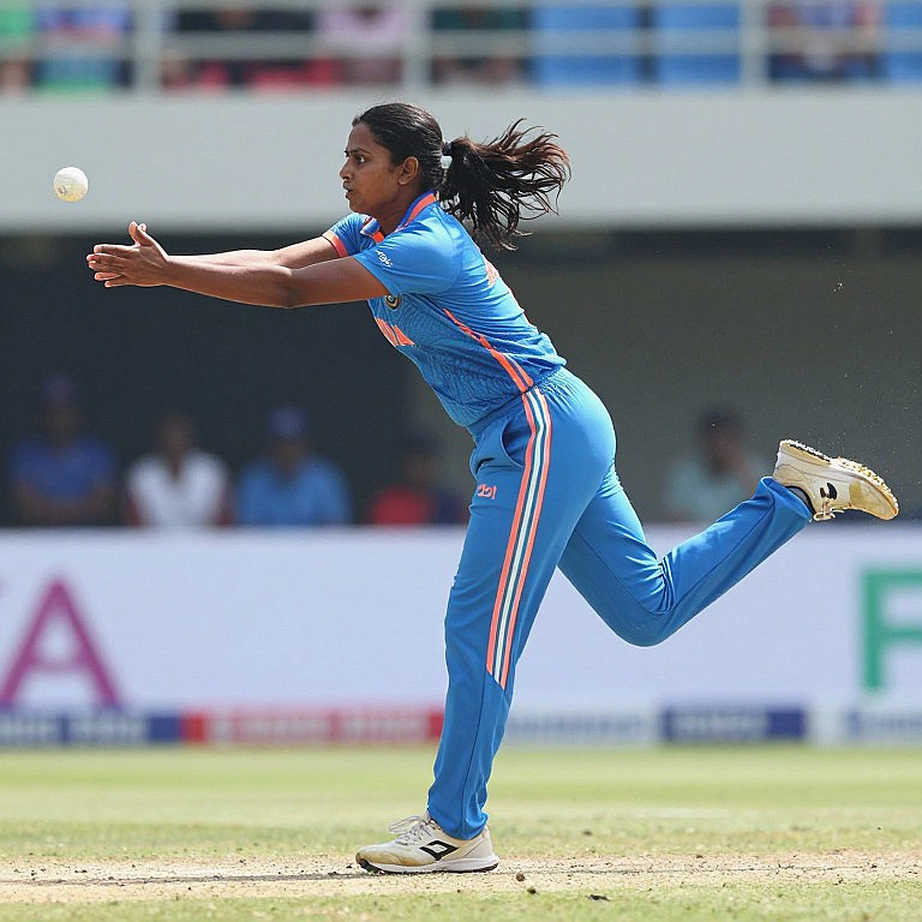
In a Senior Women's T20 Trophy match at the Maharashtra Cricket Association Stadium in Gahunje, Pune, Uttarakhand's Prema Rawat struck a half-century off just 14 balls. The official BCCI Domestic social media handle described it as the fastest fifty in women's T20 cricket. Uttarakhand posted 187 for 2 in 20 overs and then bowled Hyderabad out for 98 for 8, winning by 89 runs. Rawat's contribution came with both bat and ball in the same match — 50 runs off 14 balls and 2 for 12 from four overs.
Rawat walked in at No. 4 with only 17 balls left in the Uttarakhand innings. She had very little time at the crease and extracted maximum pace from those few deliveries. Her 50 included six fours and four sixes — 48 of her 50 runs, roughly 96 percent, came in boundaries. That indicates an innings built on clean, flat hitting rather than running between the wickets. A fifty off 14 balls works out to a strike rate of about 357, an extremely rare figure in T20 cricket. Hers was a death-overs finishing innings, not an innings-building one.
She contributed with the ball as well, taking 2 for 12 in four overs at an economy of 3.00. Hyderabad were bundled out for 98 for 8 and Uttarakhand won by a clear 89-run margin. This was not a close contest decided by one freak innings; the collective bowling effort was part of the result too.
The context of the record matters. The fastest women's T20 fifty had previously been a joint mark of 15 balls, held by Kelly, Harris (twice) and Fatima Sana. Notably, those three come from different competitions — the Super Smash, the T20 Blast and T20Is. The comparison therefore places different tournaments and different tiers — domestic and international — in a single list. BCCI Domestic also acknowledged that the comparison covers only matches for which data is available. In other words, this is the fastest fifty 'within available data', not a fully certified universal record. The date recorded in the report could not be independently verified either, so it is prudent to treat this as recent but date-unverified information.
Prema Rawat is originally a leg-spinner and is 24 years old. She has 7 T20I wickets for India at an average of 18.85 and an economy of 5.73. The sample is small, but the economy figure sends a clear signal — she is a containment bowler, used more in a run-restricting role. Her 2 for 12 in the domestic match aligns with her international economy profile. This cross-validation is the most reliable part of the assessment: her bowling identity is established.
The batting picture is less clear. The report gives no career batting average, strike rate or innings count. A single 14-ball innings is a high-variance event; it does not prove she has become a dependable finisher. The 'stunning all-round show' framing is partly narrative-driven, because an all-rounder requires sustained output with both bat and ball — here the batting half rests on one innings. Describing her as an emerging bowling all-rounder is more accurate than calling her an established one.
One more fundamental point: the feat came in the Senior Women's T20 Trophy, a BCCI domestic competition, not international cricket. Bowling attacks in domestic T20 are naturally weaker than international attacks. The record's statistical validity is high, but its competitive-difficulty context is domestic. The report carries no detail on the composition of Hyderabad's bowling attack — the pace-spin mix or experience — so the quality of the opposition bowling is unverified. That is a significant gap in assessing the difficulty of the record.
From a team perspective, the operative team in this report is Uttarakhand, not India. The only India-related data point is Rawat's T20I career line. Even so, one signal matters: a 24-year-old T20I spinner for India producing such a record at domestic level is a positive sign for the domestic women's pipeline. It suggests the domestic structure can incubate power-hitting, not just defensive bowling. However, one innings cannot support conclusions about selection impact or a change in her batting position.
As for risks, the biggest is interpretive — treating one domestic innings as established international batting capability. The second is tier confusion: calling this a domestic record an 'international T20 record' would be factually wrong. Third, the 'world record' claim comes with a data-availability caveat that should accompany every citation. Beyond that, adding batting load to a 24-year-old leg-spinner's bowling workload could raise injury risk; the report provides no workload history.
What should be watched next? First, her upcoming batting innings in domestic scorecards — if a high strike rate is repeated across several matches, the 'all-rounder' tag becomes justified. Second, her batting position in India's T20I side — a promotion up the order would signal that selectors are buying the batting narrative. Third, the stability of her T20I economy — if it stays around 5.7 across 15-plus wickets, her identity as a containment spinner is confirmed. Fourth, her demand in any future women's franchise auction — if the batting output sustains, her valuation could shift from 'bowler' to 'all-rounder' pricing.
The conclusion is clear: Prema Rawat's 14-ball fifty is a genuine, officially flagged record within the limits of available data, and her 2 for 12 plus a T20I economy of 5.73 mark her as a legitimate containment leg-spinner. The real story is a multi-skill signal emerging from India's domestic women's pipeline, not the coronation of an established all-rounder.


संबंधित खिलाड़ी
अनुशंसित
Three Matches, Six Wickets and an Unsolved Puzzle: India's Bowling Conundrum Before the Champions Trophy2026-10-22
The Economics of Cricket: 70 Percent of the Revenue, 38.5 Percent of the Share, and the Question of the Game's Future2026-11-02
From Georgetown 2026 to Rajkot 2026: The 'Meaningless' ODI List and the Verdict of the Calendar2026-10-25
WBBL|12: 43 Games in 38 Days, and the Four Matches That Are No Longer Neutral2026-10-30
Ranji Trophy: Harsh Dubey's Nine-For, Salil Arora's Fourth Straight Ton — But What Lies Behind the Scoreboard2026-11-03
India Take 2-0 Lead in Christchurch: New Zealand's Defeat Began at 41/3, Tilak and Nitish Finish It in the Final Over2026-10-25
Naim's 282 and the NCL's Empty Wicket Column: The Real Ledger Behind Dhaka Division's Win2026-10-29