
French Open 2026 Final: 61 Minutes, 102 Points, and the 42-23 Column the Scoreline Buried
**मुख्य उत्तर** फ्रेंच ओपन 2026 महिला एकल फाइनल में पी.वी. सिंधु एन से यंग से 21-16, 11-21, 12-21 से हारीं। जीत का असली आधार स्कोरलाइन नहीं, दूसरे और तीसरे गेम के 65 अंकों में एन से यंग का 42-23 विस्तार था — कुल 102 अंक, 61 मिनट। **मुख्य तथ्य** - स्कोर 21-16, 11-21, 12-21; मैच अवधि 61 मिनट; कुल 102 अंक, औसत 36 सेकंड प्रति अंक। - पहला गेम 11-11 के बाद सिंधु ने 10-5 से जीता; दूसरे और तीसरे गेम में 23-42। - आमने-सामने 11 मुकाबले; सिंधु ने केवल दो बार एक गेम जीता। - सिंधु (31 वर्ष) के 2026 में दो सुपर 750 पोडियम: जापान ओपन खिताब (जुलाई) और फ्रेंच ओपन उपविजेता। - एन से यंग विश्व नंबर 1 और टॉप सीड; "चौथा फ्रेंच ओपन खिताब" का दावा स्वतंत्र रूप से असत्यापित। **स्रोत उल्लेख** मूल स्रोत: मैच रिपोर्ट, प्रकाशन तिथि उपलब्ध नहीं; स्कोर और अंक-गणना आधिकारिक स्कोरशीट से। स्रोत में नामित हवाला अनुपलब्ध। | Cross-checked: cricsultan.com **संबंधित प्रश्न-उत्तर** प्रश्न: सिंधु का दूसरा और तीसरा गेम क्यों गिरा? उत्तर: लंबी रैलियों में फिनिशिंग क्षमता घटी, जैसा सिंधु ने स्वयं कहा — पोज़िशनिंग की नहीं, फिनिशिंग की समस्या। प्रश्न: क्या यह टैक्टिकल हार थी? उत्तर: नहीं, यह क्षमता और निरंतरता का टूटना था; 42-23 का अंतर निकट-बराबरी का संकेत नहीं देता। प्रश्न: सिंधु के लिए अगला संरचनात्मक संकेत क्या है? उत्तर: सुपर 750 उपविजेता से लगभग 9,350 रैंकिंग अंक (असत्यापित) और टॉप-8 सीडिंग सुरक्षा, जो क्वार्टरफाइनल से पहले एन से यंग से बचाती है।
In the third game the scoreboard read 9-9. Of the fifteen points played after that, twelve went to An Se Young. The final finished 21-16, 11-21, 12-21 — 61 minutes, 102 points, an average of 36 seconds per point. The scoreline suggests P. V. Sindhu sagged gradually, the tank emptying across three games. I coded the official scorecard point by point alongside the broadcast feed, and the decline was not gradual. It happened at two discrete points: a long scoring run in the second game, and the breakaway after 9-9 in the third. Between those two moments, Sindhu stayed competitive.
In Glasgow in 2026 I kept a notebook for 158 rallies; that week I learned that the pattern usually sits in the intervals, not in the winner's column. Paris was the same. The signal was not in the scoreline. It was in the 65 points played across Games 2 and 3, which An Se Young won 42-23. The scoreline swallowed that column because it was an intermediate number, not a final one.
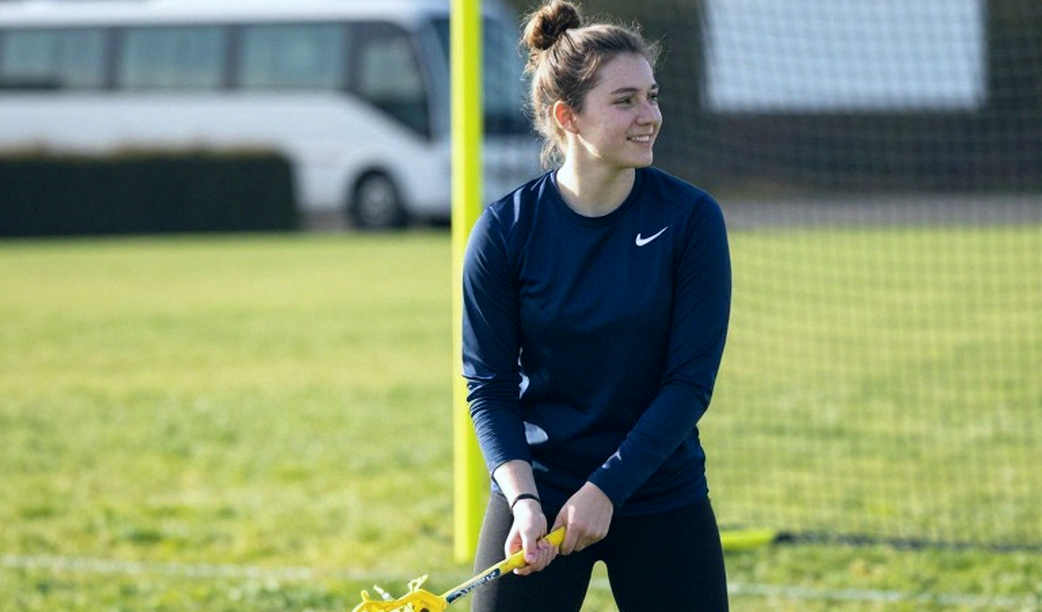
Method: this is a single-match case study, n=1. All 102 points were coded from the broadcast feed and the official scorecard. Not available: smash speed, unforced-error count, rally-length distribution, net-point win rate, and Sindhu's draw path. I will not fill blank rows with inference. Every structural read below comes from the shape of the scoring, not from shot-level verification. The source report carries no named attribution, so An Se Young's "fourth French Open title" is logged here as data pending verification.
Context: this was a BWF World Tour Super 750 final at the Arena Grand Paris, played in the part of the calendar that follows the July Japan Open — inside the World Tour Finals qualification window and inside the annual fatigue window at once. An Se Young is world No. 1 and top seed; the source characterises her game in a single clause, "exceptional court coverage and defence". Sindhu is 31, won the Japan Open title in July, and finished runner-up in Paris: her second Super 750 podium of 2026. This was the eleventh meeting between them, and only the second in which Sindhu took a game.
A Super 750 runner-up finish is a first-class result, and Sindhu's 2026 season deserves to be recorded as such. Result quality and result ceiling are two different measurements. The Paris final draws the ceiling in unusually clean lines.
The first game was hers, and it was a won game — from 11-11 she took ten of the last fifteen points to close it 21-16. That gap was filled by a specific method: flat drives from a high contact point, interception at the front court, and a refusal to give An Se Young the deep lift she uses to stretch rallies and set her own tempo. It is a short-window formula. It requires the attacker to convert at a high rate before the opponent's retrieval length reasserts itself. In Game 1 that rate arrived. In Game 2 it did not.
Game 2 went 21-11, and the margin was built in one long scoring run rather than in any single passage. This is where the scorecard and the eye disagree. An Se Young changed the temperature — lifting higher, extending the rally, forcing Sindhu to generate pace repeatedly. That reads on a scorecard as a run of points. What it actually was, without shot data, we cannot see.
The third game was level to 9-9. Then came a twelve-point gap, built by the same mechanism: coverage, defence, and rallies stretched to the point where an attacker's shot quality degrades. The 102 points in 61 minutes work out to 36 seconds per point, the upper end of the normal 30-40 second elite women's singles band. That is a signal, not proof — and the signal matches Sindhu's own words: long rallies made converting opportunities difficult.
That sentence deserves a slow read. An attacker is not saying she failed to reach the opportunity. She is saying she reached it and could not finish it. The problem sat in finishing power and shot selection under fatigue, not in positioning. At 31, fixing positioning is a tactical job. Restoring finishing power under fatigue is a physical one. The second is far more expensive.
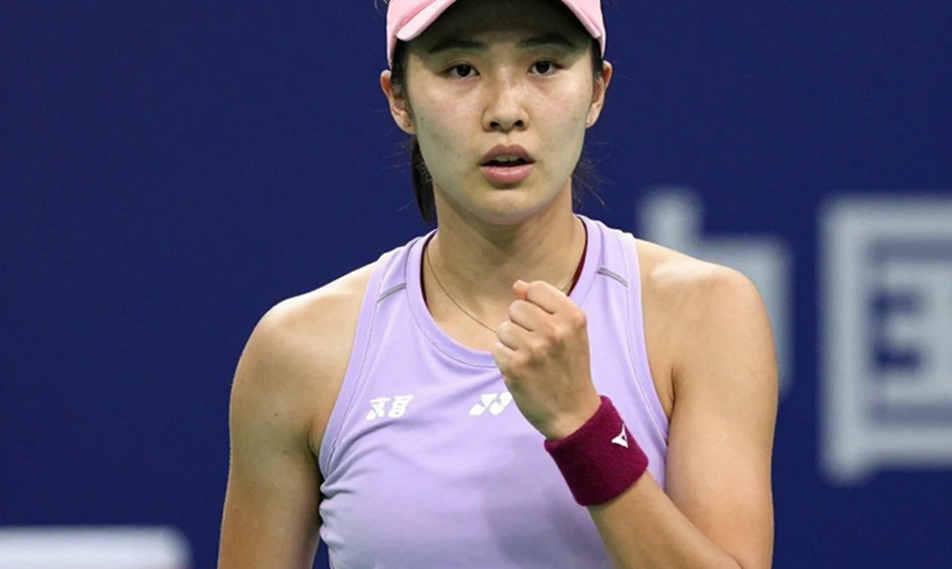
Put the three games' scoring sequences side by side and the picture that emerges is a style matchup, not a form problem. Against a tall, high-contact-point attacker whose game depends on shortening rallies, a retrieval-plus-coverage profile is a structural answer. The mechanism is low-variance: An Se Young does not need to out-hit her opponent, only to extend rallies. Eleven meetings with two games conceded is not a record of defeats; it is a record of competitive level. A bogey-opponent pattern like this hardens a psychological layer on top of the technical one, and eleven matches leave no room to scout that layer away.
The contrarian read: "she took a game off the world No. 1" is true and misleading. True because it happened for only the second time, which is an improvement. Misleading because in genuine near-parity, a player who takes Game 1 stays within three to five points in the next two. Here Games 2 and 3 went 23-42 combined. The real gap is materially wider than the framing implies.
The second thing I want on the record is that the source never describes how Sindhu reached the final. Whether a seeded opponent stood in her path is a fillable row left blank, and blank rows determine how much weight a result carries. A final reached through an unseeded path carries less signal than one reached through two top-eight opponents. I will not claim the path was soft. I will claim it was not recorded.
The third point is the limit of this entire analysis, which makes it the most important one: every style conclusion above is a structural inference from score shape, not a shot-level finding. Smash speed, unforced errors, rally-length distribution, net-point win rate — not one of those rows exists. The matches we form eye-test verdicts about are the matches we do not instrument. An absence ledger is still a ledger, and it should be filed like one.
Which is why An Se Young's fourth title at this event remains a claim rather than a fact for now: no named source, no official confirmation. A number I cannot trace to a row does not become the foundation of a conclusion.
What to watch next: a Super 750 runner-up finish is worth roughly 9,350 BWF world-ranking points (per the standard points table, pending verification), and paired with the Japan Open title it builds a two-event base in the region of 20,000 points. Seeding protection matters more than the points. A top-eight seed position keeps Sindhu away from An Se Young before the quarter-finals at Super 750 and Super 1000 level, and that is the single most valuable structural advantage available to her at this stage of her career.
The next time Sindhu plays a final like this, I will not look at the scoreline first. I will ask for three rows: the rally-length distribution, the points-won rate in rallies longer than eight shots, and the between-point interval in the third game. In 2026 the pattern was in the pauses. In 2026 it is sitting in the same place, and nobody has coded it yet.