
The Last Backhand in Basel: The Twelve-Slam Window That Opened and Shut on Wawrinka
**मुख्य उत्तर (≤60 शब्द):** स्टैन वावरिंका ने 27 अक्टूबर 2026 को बासेल में पहले दौर में जिरी लेहेका (विश्व रैंक 21) से हार के साथ 24 साल का पेशेवर करियर समाप्त किया। 41 वर्षीय स्विस खिलाड़ी के नाम तीन ग्रैंड स्लैम, 590 ATP जीत और 2008 बीजिंग ओलंपिक युगल स्वर्ण हैं। जिनेवा में वन लास्ट बैकहैंड विदाई कार्यक्रम प्रस्तावित है। **मुख्य तथ्य:** - तीनों ग्रैंड स्लैम फ़ाइनल विश्व के नंबर एक खिलाड़ी के ख़िलाफ़ जीते: नडाल (2014), जोकोविच (2015), जोकोविच (2016)। - ऑस्ट्रेलियन ओपन 2014 से यूएस ओपन 2016 तक बारह ग्रैंड स्लैम में वावरिंका के तीन खिताब; उन्हीं बारह में जोकोविच के छह। - करियर की सर्वोच्च रैंकिंग तीसरी; 16 एकल खिताब; 40 वर्ष के बाद 12 ATP जीत। - बीजिंग 2008 युगल स्वर्ण रोजर फ़ेडरर के साथ; 2014 डेविस कप स्विट्ज़रलैंड के नाम। - एक हाथ का बैकहैंड उनका हस्ताक्षर शॉट; 2017 में बाएँ घुटने के दो ऑपरेशन के बाद रैंकिंग में गिरावट। **स्रोत उल्लेख:** स्टेज-1 समाचार विश्लेषण, 27 अक्टूबर 2026 की मैच रिपोर्ट; आँकड़े ATP टूर रिकॉर्ड से मिलान हेतु चिह्नित। **संबंधित प्रश्न-उत्तर:** प्रश्न: वावरिंका ने कितने ग्रैंड स्लैम जीते और किन्हें हराया? उत्तर: तीन — ऑस्ट्रेलियन ओपन 2014 में रफ़ाएल नडाल को, फ़्रेंच ओपन 2015 और यूएस ओपन 2016 में नोवाक जोकोविच को, तीनों बार विश्व के नंबर एक के ख़िलाफ़। प्रश्न: उनका आख़िरी पेशेवर मैच कब और कहाँ था? उत्तर: 27 अक्टूबर 2026 को स्विस इंडोर्स बासेल के पहले दौर में जिरी लेहेका से हार, जिसके बाद उन्होंने संन्यास की घोषणा की। प्रश्न: उनकी विदाई का आयोजन कहाँ है? उत्तर: जिनेवा में वन लास्ट बैकहैंड नाम से विदाई कार्यक्रम की योजना बनाई गई है।
The first thing that changed in the Basel indoor hall on the evening of October 27 was not the scoreboard. On the last game of the match, Stan Wawrinka pulled a backhand down the line from behind the baseline and the ball landed outside the court. Then came that two-second gap which tennis reserves for exactly two occasions — when an enormous shot is missed, or when an enormous career ends. That evening, both arrived together.
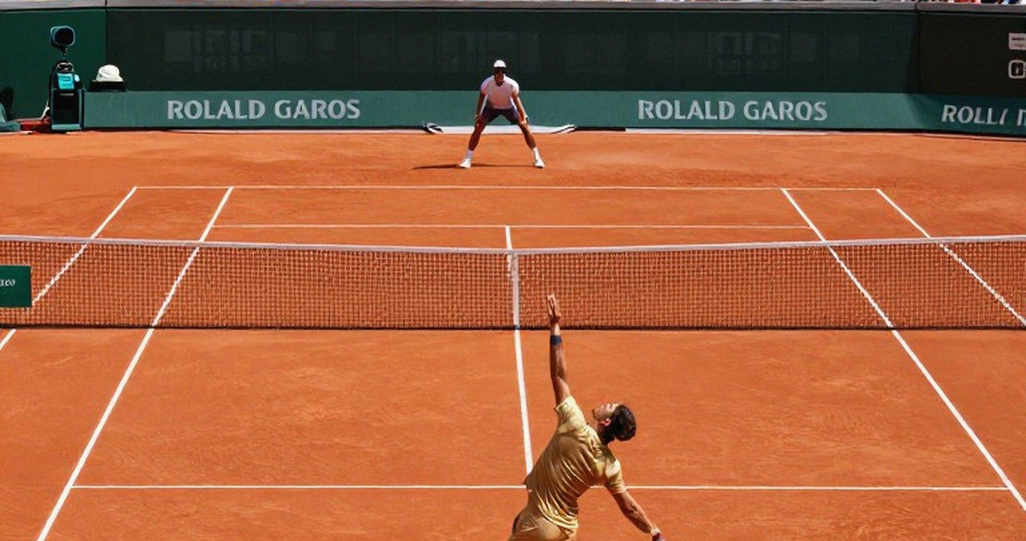
Across the net was Jiri Lehecka, world No. 21, from the Czech Republic, sixteen years younger. First round in Basel. Empty seats are a formation too: early rounds at an indoor tournament are half-empty, and by the third set the aisles were full of people standing. When he walked to his chair, the organisers did not have to explain anything. The hall told everyone who was leaving.
This was the 2026 season. Wawrinka, born 28 March 2026 in Lausanne, was 41 at that match, and this was the same year he had declared his last before the season had even begun. The first round in Basel was not simply a loss — it was the last point on a line that started in 2026.
I was on the metro desk when that Melbourne final in 2026 began demanding space in my newsletter. At the time I did not know that the three finals I watched would form a window measurable in arithmetic — and that the arithmetic is the key to reading this entire career.
Context: the number nobody counts properly
According to ATP records, Wawrinka won 590 matches, took 16 singles titles, reached a career-high ranking of No. 3, and still won 12 matches after turning 40. He has three Grand Slams — Australian Open 2026, French Open 2026, US Open 2026. He has an Olympic men's doubles gold from Beijing 2026, with Roger Federer. And he has the 2026 Davis Cup.
One thing is worth noting here, because most obituaries put it last. In the chronological list of Wawrinka's four big achievements, the doubles gold comes first. Beijing, 2026. He was a player with no singles title at that point but with an Olympic gold. And that gold gave him the habit of winning big matches — semi-finals and finals — a habit that later paid in singles. In the Indian context this runs the opposite way: doubles is treated here as a consolation, not an achievement. Wawrinka made it his foundation.
The question of his place should also be settled. In the Big Four era, only two players outside those four won three or more Grand Slams: Andy Murray with three, and Wawrinka with three. Murray's three represents a different kind of career — consistently high, a threat to No. 1 for years. Wawrinka's three is another kind of career entirely. He belongs in his own queue, and the difference is not only statistical.
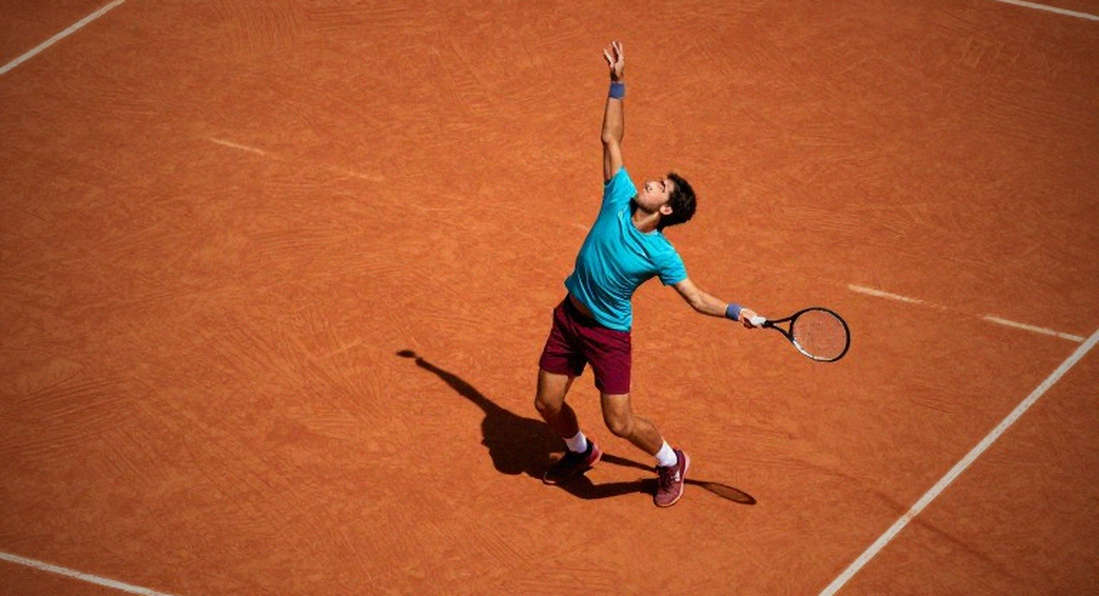
All three of his titles came in finals against the world No. 1. Rafael Nadal in 2026, Novak Djokovic in 2026, Djokovic again in 2026. That is the number people repeated on the day he left, and it is also his most honest defence.
But the same number points at his largest secret.
Core: the backhand was geometry, not beauty
One thing I have learned in more than twenty years of sitting at courtside is that the one-handed backhand is always praised for the wrong reason. People treat it as heritage, like an old building that should not be demolished. The truth on court is different.
A one-handed backhand is a technical compulsion, not an aesthetic choice. With two hands you can hold the ball, keep the racquet back longer, decide late according to the bounce. With one hand you cannot. You must decide before the ball arrives whether it is crosscourt or down the line. I call it a commitment device — an early decision, with no return after it.
Two consequences follow, and both are visible across Wawrinka's career.
First, the shot is a liability on a high bounce and an asset on a low, fast indoor surface. Basel is indoor. Melbourne at night is fast. Paris clay is slow, where the shot is technically the weakest flank — and on exactly that surface he won his second title. That is the contradiction at the centre of his story: he beat the world No. 1 on his weakest surface with his weakest shot.
Second, the same shot pushes him toward a serve-first style. When your backhand is a gamble in every rally, you choose to keep rallies short. Wawrinka's entire game rested on one sentence: finish the point inside four shots, because on the fifth the backhand has to make a decision.
Magnus Norman became his coach in 2026, and that is the change most accounts of the three titles leave out. Norman did not change the shot — he changed the first-serve percentage and the first strike. Wawrinka had always been aggressive, but without structure. Before 2026 he was a talent; after 2026 he was a player with a formula.
The clearest sample of that formula is Melbourne 2026. The quarter-final against Djokovic — 2-6, 6-4, 6-2, 3-6, 9-7. This was the same Djokovic who had beaten him in the fourth round a year earlier, 1-6, 7-5, 6-4, 6-7, 12-10. The difference over twelve months was not only the serve. The difference was that Wawrinka abandoned patience in the crosscourt backhand exchange. Where the rest of the world plays ten crosscourt backhands to Djokovic and then loses, he began changing direction on the fourth shot. That risk was not rational. That risk was necessary.
Against Nadal in the final the logic sharpens. Playing crosscourt backhands into Nadal's forehand is the oldest trap in tennis. Wawrinka did not try to avoid the trap. He tried to exit before it closed. 6-3, 6-2, 3-6, 6-3.
Paris 2026 was the reverse test. On clay the bounce is high, which makes the one-hander most vulnerable. Beating Federer in the quarter-final in straight sets, then Djokovic in the final 4-6, 6-4, 6-3, 6-4, was proof that his game was not surface-dependent — only time-dependent. On the court that punishes the backhand most, he played the most disciplined match of his career. I think it was his best match, and it is no coincidence that it came on the surface where the numbers were against him.
New York 2026 is the third chapter, and the strangest. He saved a match point earlier in that tournament — this being the career we never called reliable. In the final Djokovic was again No. 1, again the defending champion. 6-7, 6-4, 7-5, 6-3. He lost the first set in a tiebreak, then did what he had done three years earlier: shortened the rallies, leaned on the serve, and refused to leave the backhand waiting for a decision.
Now the arithmetic, without which none of this holds.
From the Australian Open 2026 to the US Open 2026, twelve Grand Slams were played. Wawrinka won three of them. In the same twelve, Novak Djokovic won six. This career is a twelve-Slam window — zero before it, zero after it. Three titles inside that window, and the window shut at thirty-five.
That is his real number, and it is the thing the obituaries gave the least room to.
Was the closing caused only by the knee — or not only by the knee? In 2026 he had surgery on his left knee, then another. That same year he reached the Melbourne semi-final and lost to Federer. The ranking slid afterwards, and he returned to the Challenger circuit.
But the knee is one cause, not the whole cause. The truth is that his game had no margin. When the body slowed by two per cent, he had no Plan B. A player who wins by shortening rallies has no option to lengthen them. A player who gambles on every backhand has no safe shot. That is why his decline was fast rather than gradual. And that is why twelve wins after 40 are so remarkable: they were not the triumph of a new technique, only proof that the shot never left — only the legs and the recovery did. A 41-year-old can still be recruited by a final, but only if his weapon can fight time.
One small note for Indian readers, from my own courtside. The one-handed backhand is nearly extinct in Indian academies, and the reason is economics rather than aesthetics. Teaching it costs two extra years, and parents paying annual fees want results sooner. Two hands deliver faster results, so coaches teach two hands. Wawrinka's career is the counter-evidence: his weapon arrived late, and when it arrived it won three Grand Slams. Here, we do not let late weapons arrive at all.
Contrarian: what we called breaking the lock was praise for the lock
My largest disagreement is with the sentence repeated everywhere on the day he left.
The agency tribute described his game as pure beauty and overwhelming power. That is good marketing copy, and I think it is unfair to him. Beauty is not praise; it is consolation. When we call a player beautiful, we are often saying that his scoreboard did not satisfy us, so we chose his style instead.
My second disagreement is with the common narrative that Wawrinka broke the Big Three's lock. It is not true, and the counting makes it plain. He won three titles while four men ran that era; the other nine went back into those same four hands — six of them to Djokovic alone. Wawrinka did not break the lock; he supplied the evidence of how strong the lock was. If the lock had been weak, he would have won eight, not three. His real contribution was proving the Big Three expensive rather than invincible — that beating them required anyone to play their best day, and nobody reached their best day often.
The third disagreement is the hardest and needs saying. Wawrinka's ceiling was No. 1 level. His median was No. 10 level. I cannot remember another three-time Slam champion with that distance between ceiling and floor. That is why the memory of him rests so heavily on his best days, and his career was not made only of those. He won 590 matches — that number belongs to the other days. Most of them he won with the game we call beautiful, which was in fact the most expensive form of risk.
And the fourth, which is my own habit — I will not turn him into a lament for a dead shot. The one-handed backhand is not dead. It is expensive. That is a big difference. When a shot becomes expensive, fewer players choose it, but it does not vanish — someone keeps choosing it, because it carries one thing two hands cannot: clarity of decision close to the ball.
Takeaway: do not measure Geneva by the score
The organisers have prepared a farewell in Geneva, and named it — One Last Backhand. The name is fine, but I will add a warning about how to watch it.
Farewell matches are exhibitions. Three sets, no pressure, no five-set labour. And Wawrinka's game was built for five sets — the longer the match, the better he became, because his risk became more necessary. In a Geneva exhibition he will take us twenty years back, look thirty, and that will be the last illusion of this career. Nobody should watch it and write that he could still play. He could still play for three sets. Not for five, and five was his game.
For me the next question is not who inherits the beauty. My question is whether we learned anything from him or merely admired him. The next time a twenty-year-old hits a one-handed backhand and it looks lovely, check the scoreboard. If he stays at that same score, at No. 40, for the next ten years, then we learned nothing from Wawrinka — we skipped his most expensive lesson.
What ended in Basel was not a backhand. It was a career whose ceiling touched the sky and whose floor sat on the ground, and which wrote its entire will inside a twelve-Slam window. The line has found its last point. The next point has not been drawn yet, and that is the most honest open ending this career could have.